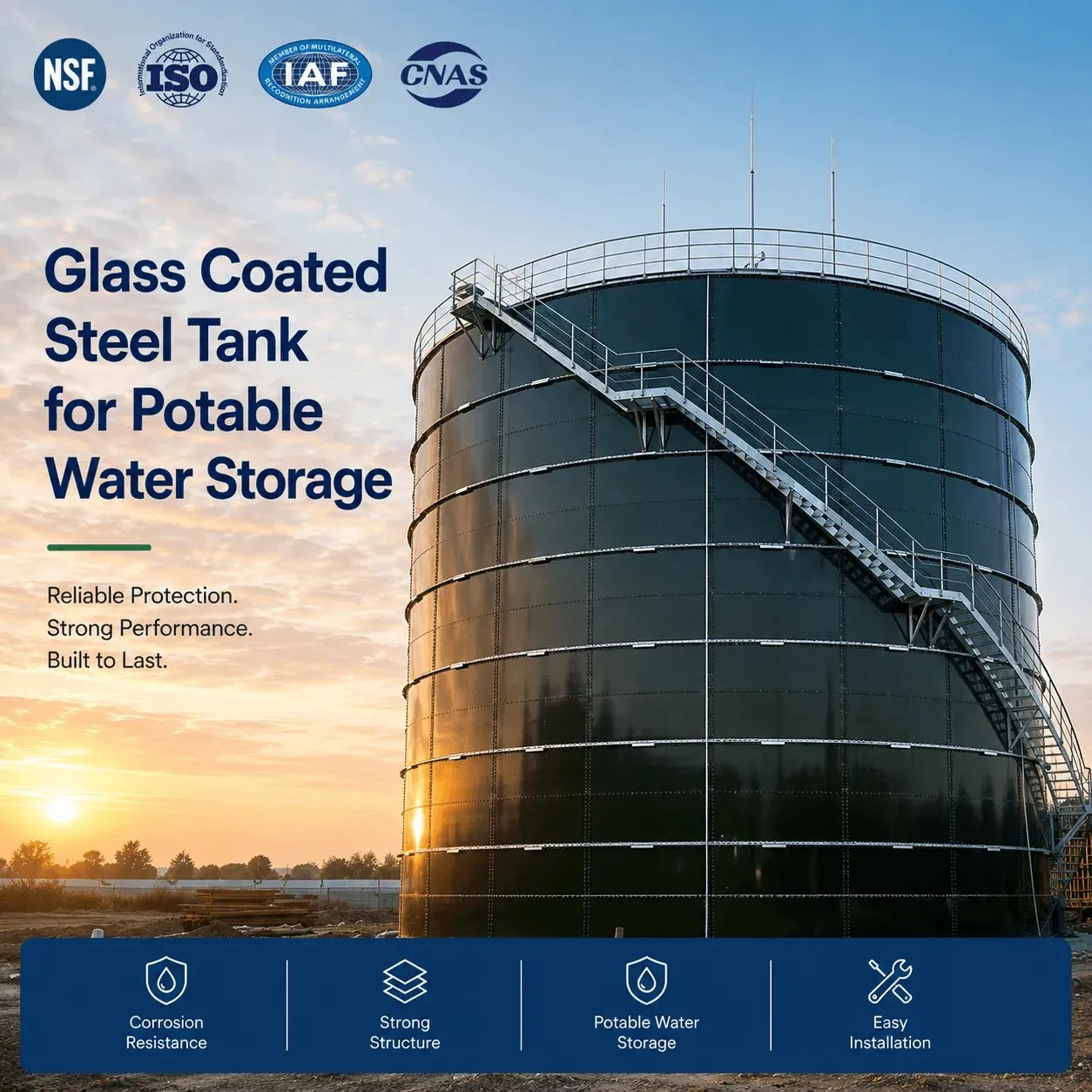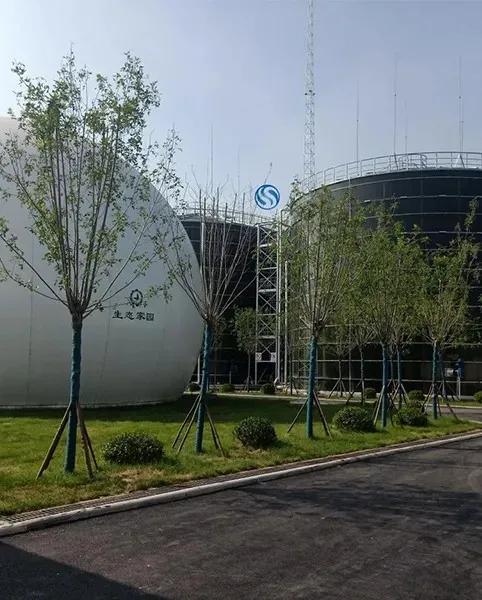

Glass Fused to Steel Tanks require complete tender documents before a buyer can compare suppliers and control project risk. A professional tender should explain the tank design, glass fused coating, steel materials, and quality control plan. Many buyers also need documents for potable water storage, wastewater storage, fire water storage, or industrial liquid storage. Without these records, it is hard to confirm tank capacity, coating performance, installation scope, or service life. A reliable enamel coating system should be supported by test records, inspection procedures, and clear acceptance criteria. The tender should also show how the manufacturer will meet site conditions, loading requirements, and local regulations.
Introduction
Summary Answer
A GFS tank manufacturer should provide a complete tender package with a technical proposal, general arrangement drawings, design calculations, material specifications, glass coating certificates, inspection and test plans, installation details, project schedules, warranty terms, company qualifications, and similar project references. For Custom GFS Tanks, the package should also identify capacity, operating temperature, stored liquid, design loads, coating thickness, leakage tests, and the exact division of supply and installation responsibilities.
1. Technical Documents Required in a GFS Tank Tender
The technical part of the tender should allow the buyer to check whether the proposed tank meets the project specification. Each document should use the same tank number, capacity, dimensions, and design conditions. This prevents conflicts between drawings, calculations, and commercial quotations.
1.1 Technical data sheet
The data sheet should state the following information:
- Tank working capacity and total geometric capacity
- Tank diameter, shell height, roof type, and foundation interface
- Stored liquid, specific gravity, pH range, and maximum operating temperature
- Design wind speed, snow load, seismic category, and site elevation
- Design life and expected operating conditions
- Number and size of inlets, outlets, drains, overflows, vents, and manways
- Internal and external coating requirements
- Access ladders, platforms, handrails, roof openings, and safety equipment
- Electrical, instrumentation, and level measurement requirements
For example, a tender may specify a 1,000 cubic meter tank with a 12 meter diameter, a 9 meter shell height, a maximum liquid temperature of 40 degrees Celsius, and a design wind speed of 40 meters per second. The manufacturer should confirm each value instead of using a general catalog description.
1.2 General arrangement and fabrication drawings
Drawings should show the tank plan, elevations, roof layout, shell courses, bottom layout, connection schedule, and foundation loads. They should identify dimensions in millimeters and include drawing revision numbers.
Important drawing details include:
- Shell plate widths and heights
- Panel bolt patterns and bolt grades
- Roof panel shape and support details
- Coating zones and edge protection
- Nozzle locations and flange standards
- Manway sizes and access clearances
- Foundation ring beam dimensions and anchor bolt locations
- Pipe support and equipment interfaces
For large tanks, the supplier should provide a foundation loading schedule. It should separate empty tank weight, operating liquid weight, wind uplift, seismic loads, and maintenance loads. This information helps the civil engineer design the concrete foundation correctly.
1.3 Design calculations
The tender should include a design basis and calculation summary. Full calculations may be submitted after award, but the tender must still show the proposed design method and key results.
The calculations should cover:
- Hydrostatic pressure at the bottom shell course
- Shell plate thickness and ring stability
- Roof dead load and maintenance load
- Wind pressure and uplift resistance
- Seismic actions when required by the site code
- Settlement tolerance and foundation interface
- Bolt strength and joint capacity
- Connection reinforcement and local stresses
The calculation report should name the design code. Common references include AWWA D103 for bolted steel tanks, EN 1991 for structural actions, EN 1998 for seismic design, and local building codes. The final code selection must match the project specification and local authority requirements.
2. Materials and Glass Coating Documents
The main protection system in a GFS tank is the glass fused coating. The tender must show what materials will be used and how the supplier will verify them.
2.1 Steel material certificates
The manufacturer should provide mill certificates or equivalent material certificates for steel plates, structural members, bolts, and major accessories. These documents should identify the material grade, heat number, chemical composition, mechanical properties, and applicable standard.
Typical records include:
- Steel plate thickness and grade certificates
- Yield strength and tensile strength results
- Elongation and impact test results when required
- Bolt grade and coating certificates
- Roof member and support steel certificates
- Stainless steel or galvanized accessory certificates
Material traceability should connect each certificate to a production batch or panel group. A clear traceability system reduces the risk of using the wrong steel grade during fabrication.
2.2 Glass coating specification
The coating specification should state the glass formulation, application process, number of firing cycles, target coating thickness, permitted color range, and repair method. Many GFS panels use a factory-applied coating in the approximate range of 250 to 450 micrometers, but the required value depends on the design and manufacturer specification.
The supplier should explain how the coating is applied to both sides of the steel panel. It should also state how edges, bolt holes, cutouts, and field connections are protected. Field repair materials must be compatible with the original coating system.
2.3 Coating inspection and test records
The tender should include sample inspection records or a quality plan covering:
- Visual inspection for pinholes, cracks, blisters, chips, and exposed steel
- Coating thickness measurement using calibrated instruments
- Holiday or pinhole detection at the specified test voltage
- Adhesion testing when required by the project specification
- Impact resistance testing
- Acid and alkali resistance testing for the stored liquid
- Test instrument calibration records
ISO 28765 is a widely recognized reference for vitreous and porcelain enamel coatings on steel. The tender should state which clauses apply and which tests will be completed. A test report should include the sample number, test date, method, result, acceptance limit, and inspector signature.
3. Quality Assurance and Inspection Documents
A low price does not prove quality. The tender should show how the manufacturer will control production from raw material receipt to final packing.
3.1 Quality management certificates
Useful company records include:
- ISO 9001 quality management certificate
- ISO 14001 environmental management certificate when required
- ISO 45001 occupational health and safety certificate when required
- Factory production control procedures
- Calibration register for inspection equipment
- Nonconformance and corrective action procedure
- Internal audit records or quality organization chart
Certificates should be valid on the tender submission date. The buyer should check the certificate scope, issuing body, certificate number, and expiration date.
3.2 Inspection and test plan
The inspection and test plan should show the inspection stage, responsible party, inspection method, acceptance requirement, and record produced. A practical plan may contain the following stages:
| Stage | Inspection activity | Typical record |
|---|---|---|
| Incoming material | Check steel grade, thickness, heat number, and certificates | Material receiving report |
| Panel fabrication | Check dimensions, holes, edges, and surface condition | Fabrication inspection report |
| Glass application | Check coating process and firing parameters | Coating production record |
| Factory inspection | Check appearance, thickness, holidays, and accessories | Final inspection report |
| Site assembly | Check bolts, sealant, alignment, and repairs | Installation checklist |
| Leakage test | Fill the tank in controlled stages and inspect joints | Hydrostatic or leakage test report |
3.3 Factory acceptance test documents
If the buyer requires a factory acceptance test, the tender should define the inspection date, witness points, sampling rate, and release conditions. The final manufacturing dossier may include dimensional reports, coating test results, bolt certificates, accessory inspection records, and photographs.
Inspection equipment should be identified by asset number. Calibration certificates should show the calibration date, due date, measurement range, and reference standard. This is especially important for coating thickness gauges, holiday detectors, torque tools, and dimensional instruments.
4. Installation, Testing, and Commissioning Documents
A GFS tank tender should define what happens after the panels leave the factory. Installation documents are important because the tank performance depends on correct assembly, sealant application, bolt tightening, and foundation quality.
4.1 Installation method statement
The method statement should describe:
- Panel unloading and storage
- Required lifting equipment and lifting points
- Panel assembly sequence
- Bolt installation and torque control
- Sealant application and curing time
- Roof installation and temporary supports
- Coating repair and edge treatment
- Work-at-height protection and site safety controls
- Weather limits for sealant and repair work
The tender should state whether the price includes labor, cranes, scaffolding, tools, accommodation, travel, unloading, and site supervision. These items can change the final project cost.
4.2 Foundation and site readiness documents
The manufacturer should provide foundation requirements before construction begins. These may include:
- Foundation ring beam dimensions
- Concrete strength requirement
- Foundation flatness and level tolerance
- Anchor bolt layout
- Allowable settlement and differential settlement limits
- Drainage and waterproofing requirements
- Access requirements for transport and lifting equipment
The civil contractor should complete a foundation handover report before tank assembly. The report may include survey results, concrete test results, anchor bolt measurements, and photographs.
4.3 Leakage test and commissioning plan
The test plan should state the filling sequence, inspection points, test duration, and acceptance criteria. A common approach is to fill the tank in stages, such as 25 percent, 50 percent, 75 percent, and 100 percent of the operating level. The tank is then inspected for leakage, abnormal movement, coating damage, and connection problems.
The exact method must follow the project specification, local safety rules, and the selected design standard. The supplier should not promise a test result without defining the test conditions.
4.4 Step-by-step tender-to-commissioning flow
- Issue the tender specification. The buyer states capacity, liquid, site conditions, standards, accessories, and delivery limits.
- Review technical requirements. The GFS tank manufacturer checks storage conditions, design loads, foundation information, and local regulations.
- Submit the tender package. The supplier provides drawings, calculations, certificates, quality plans, schedule, price, and warranty.
- Complete technical clarification. Both parties resolve deviations, exclusions, interfaces, and approval dates.
- Approve final drawings. The buyer and civil contractor confirm dimensions, nozzles, foundation loads, and access requirements.
- Manufacture and inspect panels. Steel, coating, dimensions, accessories, and packing are checked and recorded.
- Install the tank. The site team follows the approved method statement and records bolt and sealant inspections.
- Test and commission. The tank is inspected, filled under control, checked for leakage, and handed over with the final dossier.
5. Commercial and Contract Documents
Technical documents alone do not define the full tender offer. The commercial section should make the price, delivery, responsibilities, and risks clear.
5.1 Detailed price schedule
The price schedule should separate the following items:
| Cost item | What the buyer should confirm |
|---|---|
| Tank shell and roof | Capacity, dimensions, coating, steel, and standard inclusions |
| Accessories | Ladders, platforms, manways, vents, drains, and level equipment |
| Freight and packing | Delivery destination, packing method, unloading point, and insurance |
| Installation | Labor, tools, lifting equipment, supervision, and travel costs |
| Testing | Inspection, leakage testing, disinfection, and commissioning |
| Optional items | Insulation, heating, mixers, liners, valves, and control systems |
5.2 Delivery schedule
The schedule should show engineering time, drawing approval time, manufacturing time, inspection time, shipping time, and site installation time. For example, a tender may allow 3 weeks for engineering approval, 8 weeks for manufacturing, 2 weeks for factory inspection and packing, and 2 to 6 weeks for transport depending on destination.
The supplier should also state which events can extend the schedule. Common examples include late foundation completion, delayed drawing approval, changes in liquid chemistry, customs delays, and severe weather.
5.3 Deviations and exclusions list
Every deviation from the buyer's specification should be listed. The list should include alternative standards, changed materials, different accessories, excluded civil works, and limits on performance guarantees. A clear deviations list is more useful than a general statement that the offer complies with the specification.
6. Warranty, After-Sales, and Company Qualification Documents
Buyers should review the manufacturer's ability to support the tank after delivery. A tender should include both warranty terms and evidence of experience.
6.1 Warranty document
The warranty should define:
- Warranty period for the glass coating
- Warranty period for structural performance
- Warranty period for sealants and accessories
- Required operating conditions
- Exclusions for misuse, chemicals, impact, settlement, or unauthorized repair
- Claim notification procedure
- Repair or replacement responsibility
- Response time for technical support
A warranty should be linked to measurable conditions. These may include liquid temperature, pH range, chemical concentration, filling level, maintenance practice, and foundation performance.
6.2 Similar project references
The manufacturer should provide project references that match the proposed tank type. Useful reference data includes:
- Client and project location, when disclosure is permitted
- Tank capacity and number of tanks
- Stored liquid and operating conditions
- Supply date and installation date
- Design standard and coating system
- Scope of supply and installation responsibility
- Contact information for reference verification, when available
Wansheng can present its relevant GFS tank manufacturing and project implementation records in a project list. The list is more useful when it includes capacities, applications, delivery dates, and the actual scope completed.
6.3 Research and development evidence
When a project needs a special coating, unusual diameter, high temperature, or difficult liquid, the buyer should request evidence of technical development. This may include the number of coating trials, years of production experience, test batches, laboratory equipment, and field performance records.
A credible technical file may state that a coating formulation was evaluated through a defined test program, such as 10 or more laboratory samples, repeated thickness checks, controlled firing records, and chemical resistance testing. The figures should be supported by internal reports and should apply to the offered product.
7. Document Comparison Checklist for Tender Evaluation
The following table can help a buyer compare GFS tank suppliers. It focuses on documents that can be checked before the contract is awarded.
| Document | Minimum information | Why it matters |
|---|---|---|
| Technical data sheet | Capacity, dimensions, liquid, temperature, loads | Confirms the basic design scope |
| General arrangement drawing | Dimensions, connections, roof, manways, foundation interface | Checks civil and piping coordination |
| Design calculation summary | Codes, loads, shell design, stability, foundation reactions | Checks structural suitability |
| Material certificates | Steel, bolts, accessories, traceability | Confirms material quality |
| Coating specification | Application, thickness, firing, repair, chemical resistance | Confirms corrosion protection |
| Inspection and test plan | Stages, methods, acceptance criteria, records | Defines quality control |
| Installation method | Assembly, torque, sealant, safety, repair | Reduces site defects |
| Leakage test plan | Filling stages, duration, inspection, acceptance | Confirms tank tightness |
| Warranty | Coverage, limits, exclusions, claims | Defines long-term responsibility |
| Project references | Capacity, application, date, scope | Shows practical experience |
8. Common Tender Document Problems
8.1 Generic brochures without project data
A brochure may describe a standard tank but not the tank offered for the project. The tender should include project-specific capacity, design loads, coating requirements, connections, and accessories.
8.2 Missing test acceptance limits
Statements such as high quality or long service life are not test criteria. The tender should identify the test method, measurement unit, acceptance limit, and responsible inspector.
8.3 Unclear supply boundaries
Some offers include the tank but exclude foundation bolts, valves, ladders, lifting equipment, testing, or site repairs. The buyer should request a marked supply boundary drawing and a list of exclusions.
8.4 Warranty without operating conditions
A warranty is difficult to enforce if it does not state liquid chemistry, temperature, filling frequency, cleaning method, and foundation requirements. These conditions should be written into the tender and contract.
8.5 No document submission schedule
Engineering delays can stop manufacturing and site work. The tender should define document submission dates, review periods, revision limits, and final dossier requirements.
Conclusion
A GFS tank manufacturer should provide more than a price and a product brochure with a tender. The complete package should include project-specific technical data, drawings, design calculations, material certificates, glass coating records, quality plans, inspection results, installation procedures, testing documents, commercial details, warranties, and verified project references. For Custom GFS Tanks, buyers should also check liquid chemistry, coating thickness, design loads, foundation conditions, and supply boundaries. A clear document package allows the buyer to compare Wansheng and other suppliers on measurable technical, quality, and commercial requirements before placing an order.