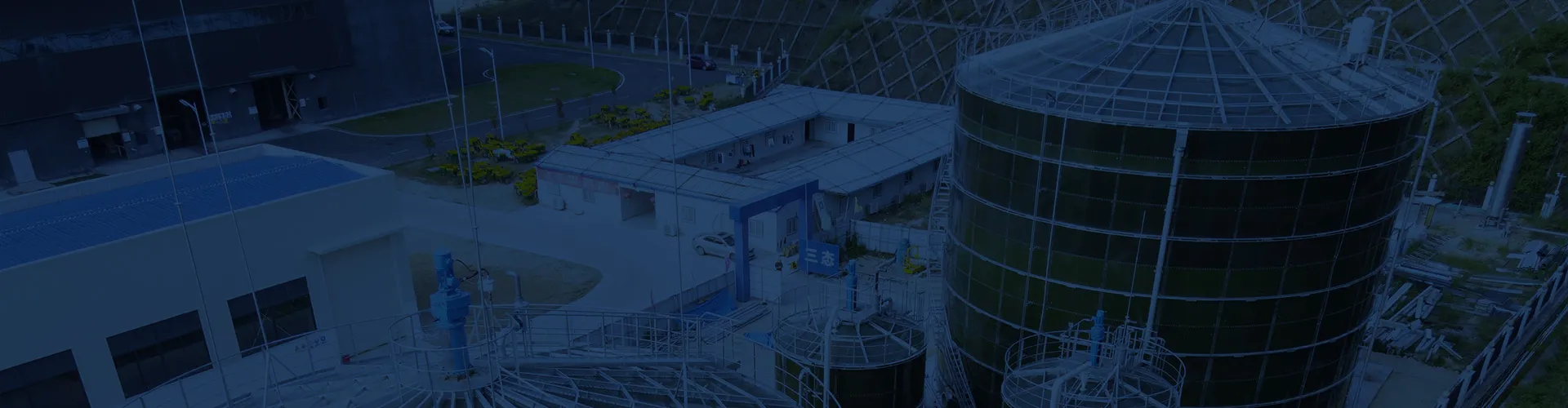
Selecting the right storage tank type is a critical decision for municipal water authorities, EPC contractors, industrial end-users, and agricultural operations. Among today’s mainstream solutions, concrete tanks and Glass-Fused-to-Steel (GFS) tanks are two widely adopted options. Each has unique structural characteristics, installation requirements, lifecycle performance, and cost implications. Understanding these differences and evaluating them against project needs is essential to ensure long-term efficiency, safety, and operational reliability.
This article outlines the key considerations to help professionals make informed decisions between concrete tanks and GFS tanks.
1. Environmental and Application Conditions
Different applications impose different stress conditions on tank structures. Factors such as chemical exposure, pH variation, moisture levels, and gas composition significantly influence tank life.
Concrete performs adequately in neutral or mildly aggressive environments, but it may deteriorate in applications involving hydrogen sulfide, methane, acidic wastewater, or anaerobic digestion. Improperly cured or poorly coated concrete surfaces can experience cracking, spalling, or microbial-induced corrosion.
Glass-Fused-to-Steel tanks are better suited for variable and harsh environmental conditions, particularly in wastewater treatment, biogas production, industrial effluent, and high-humidity environments. Their fused glass coating provides a chemically inert and highly corrosion-resistant barrier, maintaining structural integrity even under extreme pH and gas exposure.
2. Installation Time and Construction Site Constraints
Concrete tanks typically require extensive civil work, formwork, steel reinforcement, curing periods, and strict weather control. Construction can span several months and may experience delays due to humidity, temperature, or curing challenges.
Glass-Fused-to-Steel tanks are modular and delivered with prefabricated panels. They can be assembled on-site in significantly shorter time frames. Construction schedules are more predictable, and installation is less affected by weather conditions. For projects with tight deadlines, limited site space, or remote locations, GFS tanks often provide a more efficient solution.
3. Structural Durability and Corrosion Resistance
Concrete is structurally strong, but its long-term durability depends heavily on material quality, reinforcement protection, crack control, and maintenance. Over time, concrete may experience microcracks that allow chemicals or moisture to penetrate, leading to reinforcement corrosion or surface degradation.
GFS tanks utilize steel plates coated with enamel at high temperatures, creating a bond that is exceptionally resistant to corrosion and abrasion. The coating is inert, does not degrade under UV exposure, and provides long-term stability without the need for recoating.
When evaluating durability, consider the expected chemical environment, exposure to corrosive gases, and long-term maintenance requirements.
4. Maintenance Requirements and Lifecycle Costs
Concrete tanks generally require protective coatings or liners to prevent chemical attack and leakage. These coatings occasionally need repair or replacement, increasing long-term maintenance costs. Cracks, joint leaks, or spalling may necessitate structural repairs that are costly and disruptive.
Glass-Fused-to-Steel tanks require minimal maintenance once installed. The coated panels do not require repainting, and the bolted design allows for easier inspection and part replacement if needed. While initial investment may be comparable or slightly higher depending on project size, the long-term operational cost is typically lower due to reduced maintenance.
Assessing total lifecycle cost rather than only initial CAPEX is essential when choosing between the two options.
5. Expansion, Relocation, and Flexibility
Concrete tanks have a fixed, immovable structure. Expanding capacity often requires additional civil work or constructing a new tank. Relocation is not feasible.
Glass-Fused-to-Steel tanks offer high flexibility. Their modular design allows for future expansion, panel replacement, or even complete relocation. For operations expecting capacity changes, process upgrades, or shifting site conditions, modular tanks provide a long-term strategic advantage.
6. Construction Quality Control
Ensuring consistent quality across large concrete structures requires expertly managed on-site processes. Variability in concrete mixing, curing, and environmental conditions can influence tank performance.
GFS tanks benefit from factory-controlled production. Each panel undergoes standardized enamel-fusion processes, ensuring uniform coating thickness, hardness, and corrosion resistance. Factory-produced components significantly reduce the risk of on-site quality deviations.
7. Project Budget and Financial Planning
Concrete tanks may appear cost-effective at the initial construction phase, but long-term maintenance expenses, coating repairs, structural rehabilitation, and operational downtime can increase total cost of ownership.
GFS tanks often provide a predictable cost structure with lower lifetime maintenance. For finance-sensitive projects, evaluating total ownership cost—including installation speed, operational downtime, and maintenance—ensures a more accurate assessment.
8. Compliance, Standards, and Safety
Concrete and GFS tanks both comply with various global standards, but their performance under specific regulatory requirements differs. For example, potable water, wastewater, and industrial applications may require compliance with coating standards, leak prevention standards, and corrosion resistance guidelines.
Decision-makers should ensure their selected tank type aligns with international and local standards applicable to their industry and operational environment.
9. Long-Term Operational Reliability
Operational reliability depends on the tank’s ability to maintain structural integrity, prevent leakage, withstand chemical fluctuations, and minimize downtime. Concrete tanks depend heavily on workmanship and maintenance. GFS tanks provide a stable, predictable lifespan due to their corrosion-resistant properties and controlled manufacturing processes.
Conclusion
Choosing between a concrete tank and a Glass-Fused-to-Steel tank requires a holistic evaluation of environmental conditions, construction timelines, durability expectations, maintenance requirements, financial planning, and long-term operational objectives. Each solution has its advantages depending on the application scenario, but decision-makers should prioritize total lifecycle performance, design flexibility, and reliability when planning storage infrastructure. Contact Wansheng to solve your concern!