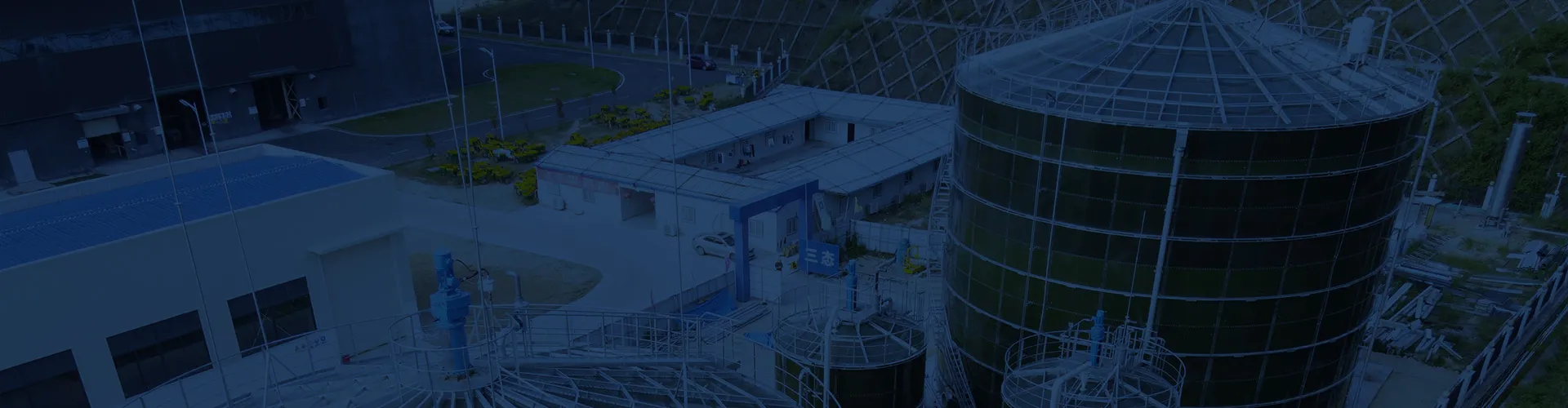
Anaerobic digestion has become a cornerstone technology for wastewater treatment plants, agricultural biogas projects, industrial organic waste processing, and renewable energy initiatives. Selecting the right anaerobic digester for your project is critical to ensure stable performance, efficient biogas production, and long-term operational reliability. The right choice affects system efficiency, operational costs, maintenance requirements, and the overall success of the project.
This guide provides a comprehensive overview of factors to consider when choosing an anaerobic digester, including technology types, design considerations, operational requirements, and long-term performance expectations.
1. Understand the Purpose and Application
Anaerobic digesters are used for multiple applications:
Municipal Wastewater Treatment: Stabilizing sludge, reducing volume, and producing biogas.
Agricultural Biogas Projects: Processing animal manure, crop residues, and organic waste to generate energy.
Industrial Organic Waste Treatment: Managing food processing byproducts, brewery waste, or chemical-organic effluents.
Renewable Energy and Circular Economy Initiatives: Producing methane or biogas as a clean energy source.
Understanding the specific purpose of your digester will help determine the type, size, and operational strategy required.
2. Determine the Appropriate Digester Type
Several anaerobic digester types are available, each with advantages depending on feedstock characteristics, project scale, and operational conditions.
Continuous Stirred-Tank Reactor (CSTR)
Ideal for homogeneous feedstocks with high water content.
Provides stable mixing and temperature control.
Suitable for municipal wastewater sludge or slurry-type agricultural waste.
Plug Flow Digester
Handles thicker, fibrous feedstocks such as livestock manure.
Ensures sequential processing along the digester length.
Often used for medium to large-scale agricultural projects.
Covered Lagoon Digester
Large-scale outdoor digesters with floating covers.
Economical for warm climates and high-volume livestock manure processing.
Requires careful management of odor and temperature fluctuations.
Upflow Anaerobic Sludge Blanket (UASB)
Suitable for industrial wastewater with high organic load.
Compact design with high treatment efficiency.
Requires precise monitoring and skilled operation.
Selecting the correct type is essential to achieve optimal retention time, gas yield, and system stability.
3. Evaluate Feedstock Characteristics
The composition, moisture content, particle size, and biodegradability of the feedstock strongly influence digester selection:
High-solids content requires digesters with strong mixing capabilities.
Fibrous materials benefit from plug flow or specialized mechanical agitators.
Industrial effluents with pH extremes or chemicals may require corrosion-resistant construction.
Consistency and predictability of feedstock loading ensure stable microbial activity and biogas production.
Feedstock analysis before system design is critical for sizing and operational planning.
4. Consider Digester Capacity and Retention Time
Digester capacity is determined by expected feedstock volume, organic load, and desired hydraulic retention time (HRT). Longer retention times allow thorough digestion but increase tank volume and footprint, while shorter retention times increase processing rates but may reduce biogas yield. Optimizing capacity balances treatment efficiency, gas production, and space constraints.
5. Assess Temperature Control and Climate Impact
Anaerobic digestion is highly temperature-dependent. Common operating ranges include:
Mesophilic (30–40°C): Stable operation, suitable for most agricultural and wastewater applications.
Thermophilic (50–60°C): Higher biogas yield and faster digestion, but more sensitive to temperature fluctuations.
Climate and ambient temperature influence insulation requirements, heating systems, and energy consumption.
6. Analyze Material and Structural Requirements
Tank material and structural design determine durability and maintenance:
Concrete digesters are traditional but may require protective coatings and frequent maintenance.
Glass-Fused-to-Steel or enamel-lined steel tanks resist corrosion, chemicals, and abrasion.
Stainless steel digesters provide high hygiene and corrosion resistance but may increase initial investment.
Selecting materials compatible with feedstock and operational environment ensures a long service life.
7. Evaluate Mixing and Agitation Systems
Effective mixing prevents sedimentation, dead zones, and stratification:
Mechanical mixers, recirculation pumps, or gas-lift systems are common options.
Mixing intensity and frequency must match feedstock characteristics and digester type.
Maintenance and energy consumption should be factored into the operational cost.
Proper mixing enhances microbial contact with substrates and maximizes biogas yield.
8. Plan for Biogas Collection and Utilization
Biogas collection design impacts both safety and energy recovery:
Gas-tight covers and pressure relief valves prevent leaks.
Desulfurization or scrubbing systems may be required for hydrogen sulfide or moisture removal.
Integration with combined heat and power (CHP) systems or boilers optimizes energy utilization.
Efficient biogas handling ensures environmental compliance and maximizes economic returns.
9. Consider Maintenance, Monitoring, and Automation
Routine monitoring ensures operational stability:
Track pH, temperature, volatile fatty acids, biogas production, and solids content.
Inspect mechanical and structural components periodically.
Automation systems reduce operator workload and provide early warnings for process disturbances.
Proactive maintenance prolongs digester life and minimizes downtime.
10. Evaluate Cost and Return on Investment
Project budgeting should include:
Initial capital investment for tanks, mixers, heating, and gas systems.
Operational expenses for labor, energy, and maintenance.
Potential revenue from biogas utilization or carbon credits.
Total lifecycle cost, not just initial expenditure, is the most accurate measure of value.
Conclusion
Selecting the right anaerobic digester requires careful consideration of feedstock, digester type, capacity, temperature control, material, mixing systems, gas handling, and operational planning. A well-chosen digester ensures stable biogas production, long-term durability, minimal maintenance, and maximum return on investment. Wansheng provides tailored anaerobic digester solutions designed to optimize performance, maximize energy recovery, and deliver reliable long-term operation for every project.